


KS&R goes deeper into how and where Gen Z goes for entertainment and information. Learn more.

Successful Generation Z marketing strategies have adapted to this age group’s eight-second attention span, content consumption habits, and values. Current events continue to shape their media preferences, video content engagement, brand connections, lifestyles, beliefs, and outlook.
Who is Generation Z?
Generation Z (aka Gen Z, iGen, centennials, post-Millennials, or homeland generation), refers to the generation that was born between 1997-2012.
This generation has been raised on the Internet with multiple screens, social media, and streaming, not to mention experiencing a global pandemic during their formative years. More are starting to enter the workforce, starting families and developing long-term goals to better shape their future.
Gen Z Statistics
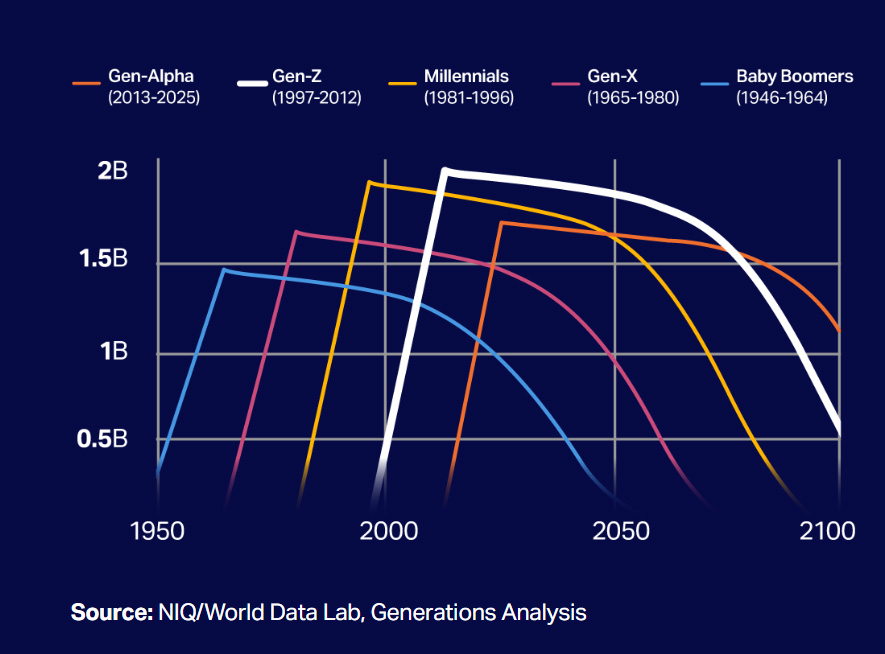
- Gen Z is the largest generation in history, constituting 26% of the total population across the world equaling 2 billion people. (NIQ/World Data Lab, 2025)
- Approximately three out of 10 Americans—or 74 million—fall within the Generation Z demographic. (The Annie E. Casey Foundation, 2025)
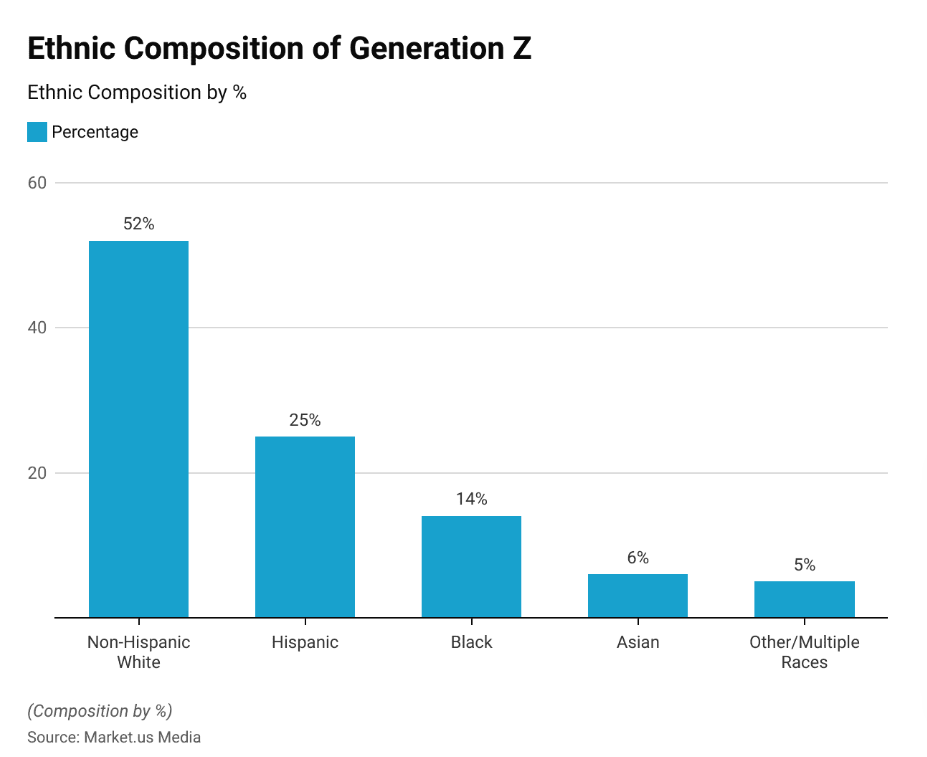
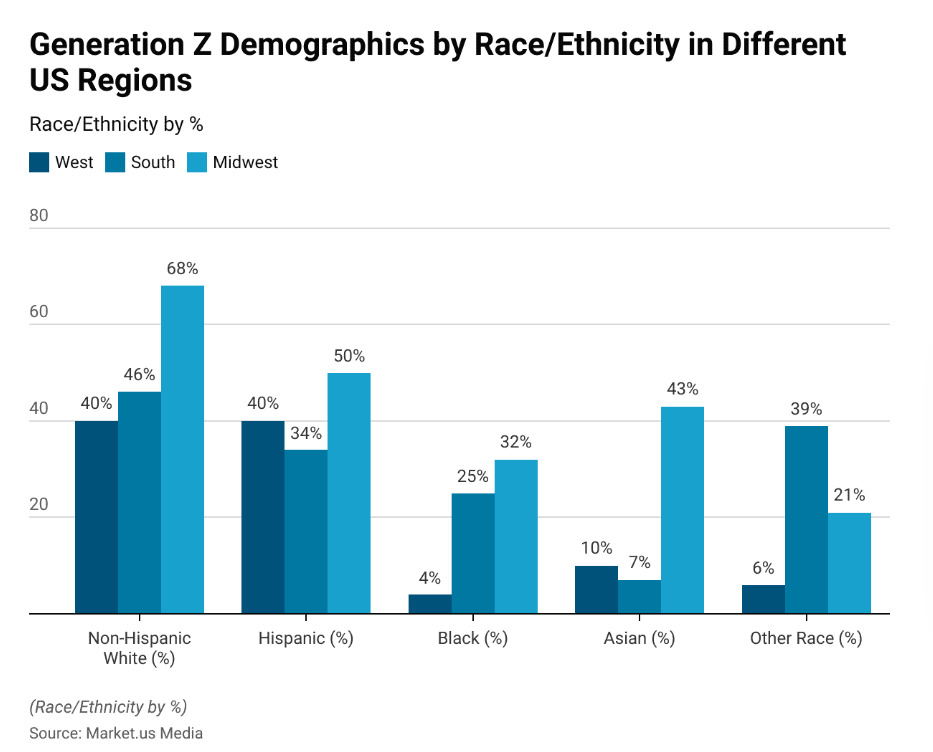
- Generation Z is racially diverse, while that diversity uniquely spreads across regions. (Market.us Media, 2026)
- 63% of Gen Z workers prefer hybrid work as their ideal work situation. (The Annie E. Casey Foundation, 2025)
- Over one-third of Gen Zs have taken the initiative to seek professional help to address their mental well-being. (The Annie E. Casey Foundation, 2025)
- Gen Z’s spending power is expected to grow to $2.7 trillion USD over the next few years and $12T by 2030, having a significant influence on the products manufacturers and retailers sell in the near future. (NielsenIQ, 2025)
- When Gen Zers reach 25, their mean and median spending per capita in the U.S. will outpace prior generations and by 2030, Gen Z will contribute more wealthy people to every region in the world. (Nielsen IQ, 2025)
Gen Z Media Habits
- Seventy-three (73%) of Gen Z media consumers prefer TV and movie recommendations from social media over broader platforms. (S&P Global Market Intelligence Report via Advanced TV Insider, December 2025)
- Seventy-six (76%) say that social media services provide more relevant, personalized content vs. TV/video services. (S&P Global Market Intelligence Report via Advanced TV Insider, December 2025)
- About 50% of Gen Z and Millennials combined said they spend more time watching social media videos and streaming services than watching legacy television. (Deloitte, October 2025)
- Content value is measured by authenticity and relatability with over half of Gen Z saying social content feels more relevant, and half saying they feel closer to creators than actors. (Deloitte, October 2025)
- Almost half of younger generations are watching more micro-series content now than they did a year ago. (Deloitte, October 2025)
- Nearly 99% of Gen Zs either own a smartphone or have access to one, making them the first truly “digital native” generation (market.us, 2025)
- Phones are the most common screen for short-form video, respondents said that nearly a quarter of those videos are watched on a TV set. (Hub Entertainment Research, Video Redefined, 2025)
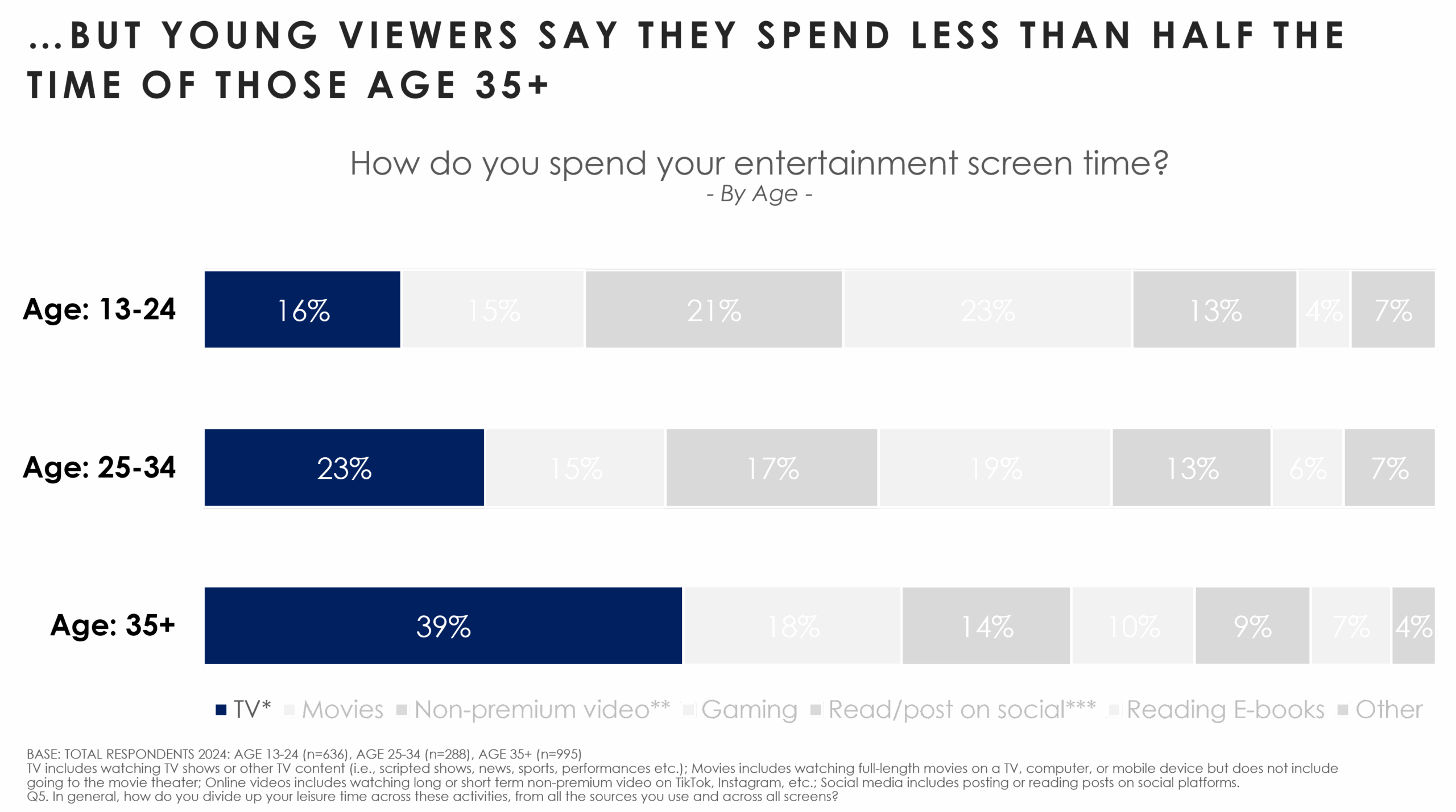
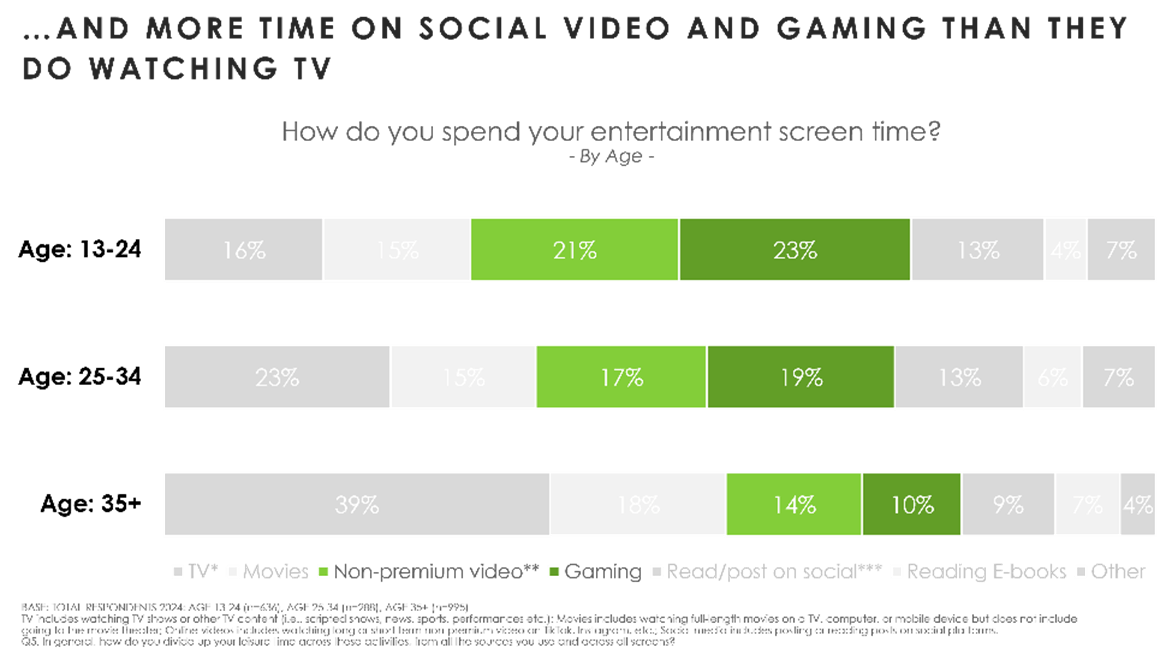
- Young people spend more time watching “non-premium” online video (21%) than they do regular TV shows (16%) compared to consumers age 35+ spending 39% of their screen time on TV shows – more than twice as much as online videos (14%). (Hub Entertainment Research, Video Redefined, 2025)
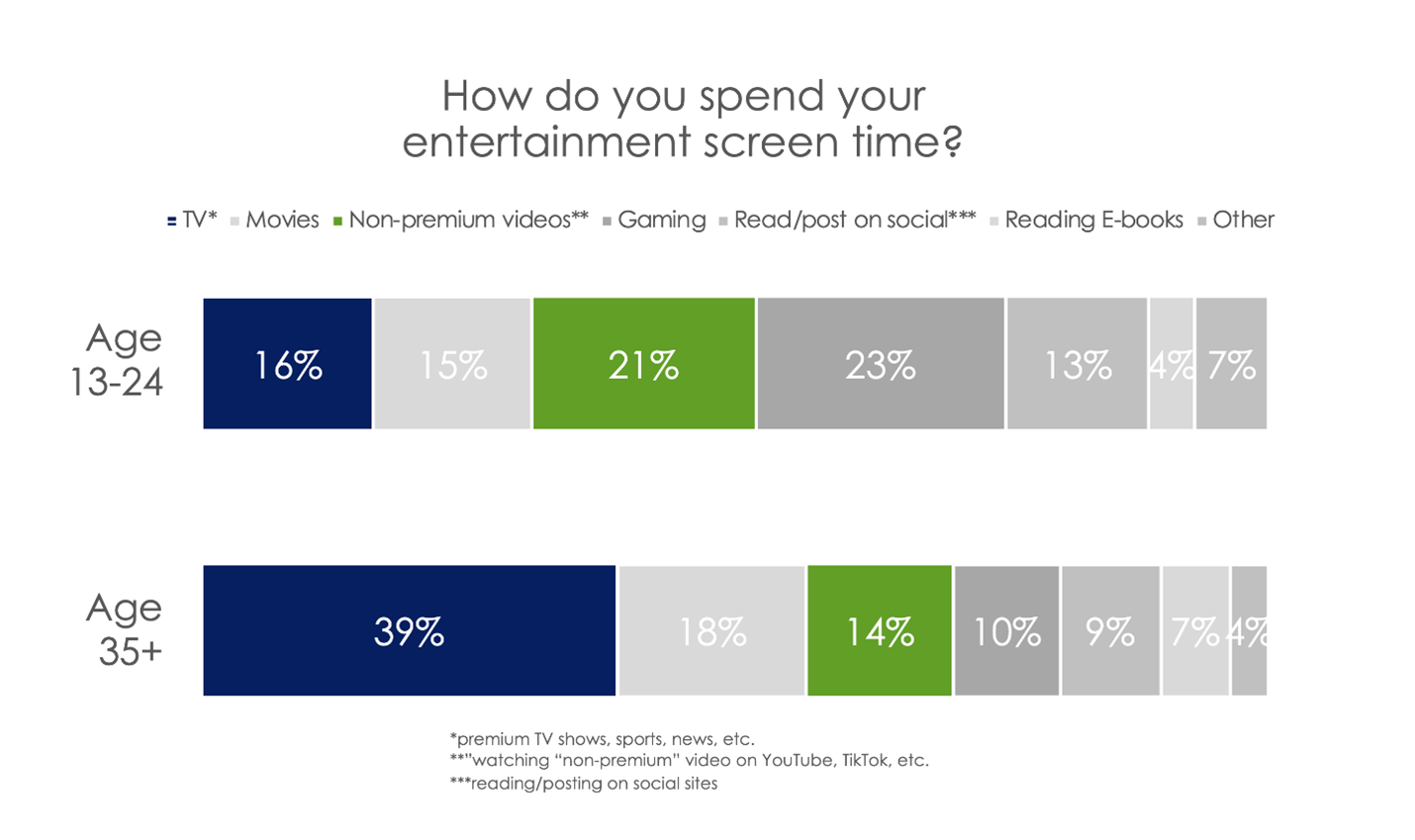
- More than half (57%) of viewers 13-24 say they spend less time watching “regular TV” because of the time they spend watching services like YouTube and TikTok. (Hub Entertainment Research, Video Redefined, 2025)
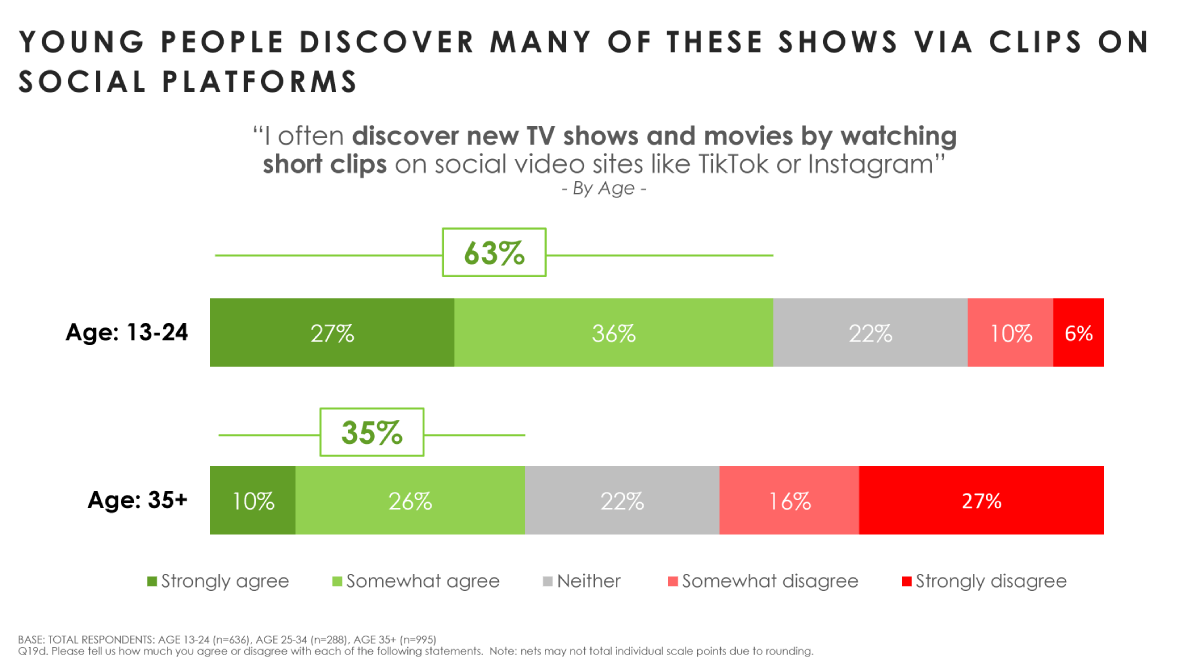
- Young people still watch TV, and more than 60% of them say they often watch shows or movies that they discovered for the first time via clips on social platforms like TikTok and Instagram. (Hub Entertainment Research, Video Redefined, 2025)
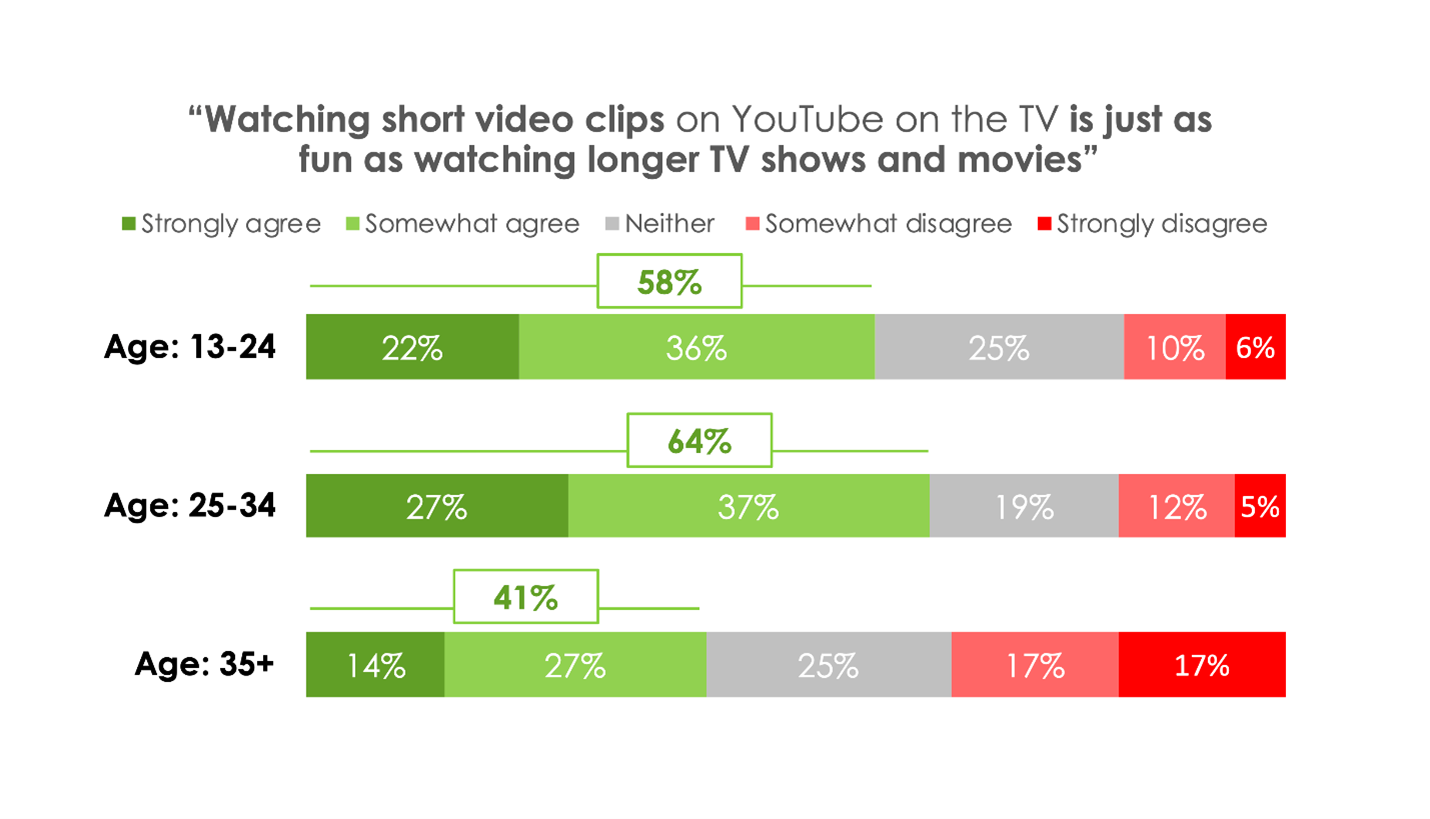
- Short-form videos aren’t just filler content – about 60% of all viewers under age 35 say that short videos are just as much fun as “premium” TV. (Hub Entertainment Research, Video Redefined, 2025)
- Young viewers say they spend less than half the time watching TV than those age 35+. (Hub Entertainment Research, 2025)
- Gen Z regularly go to the movies (90%) – highest of all generations. (Hub Entertainment Research / Ad Week, 2025).
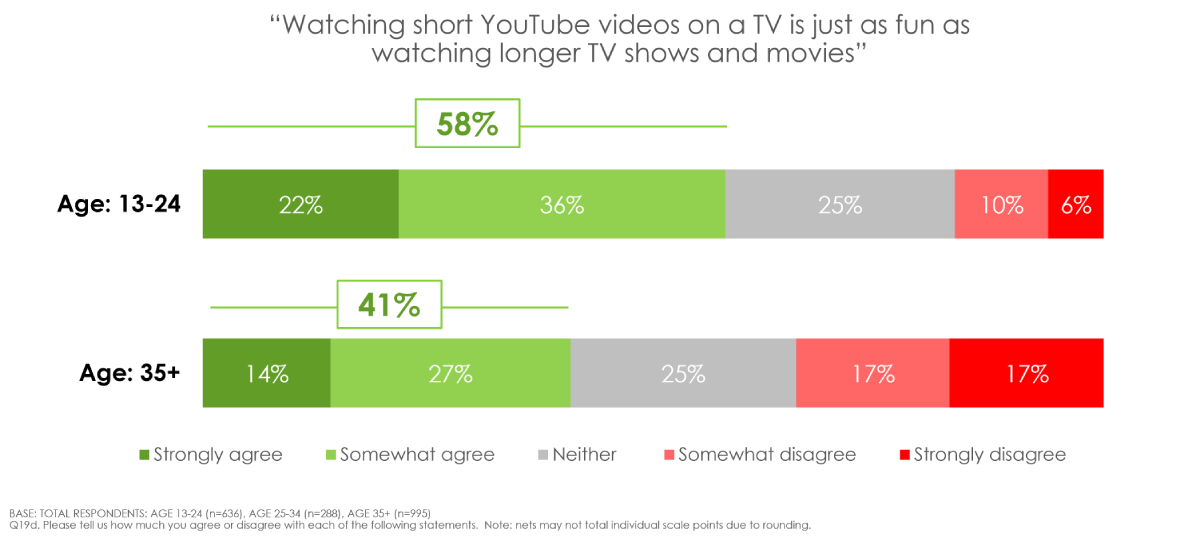
- YouTube content is at home on a TV screen with almost six out of ten (58%) of A13-24 reporting that watching short YouTube videos on a TV is just as much fun as watching longer TV shows and movies. (Hub Entertainment Research, 2025).
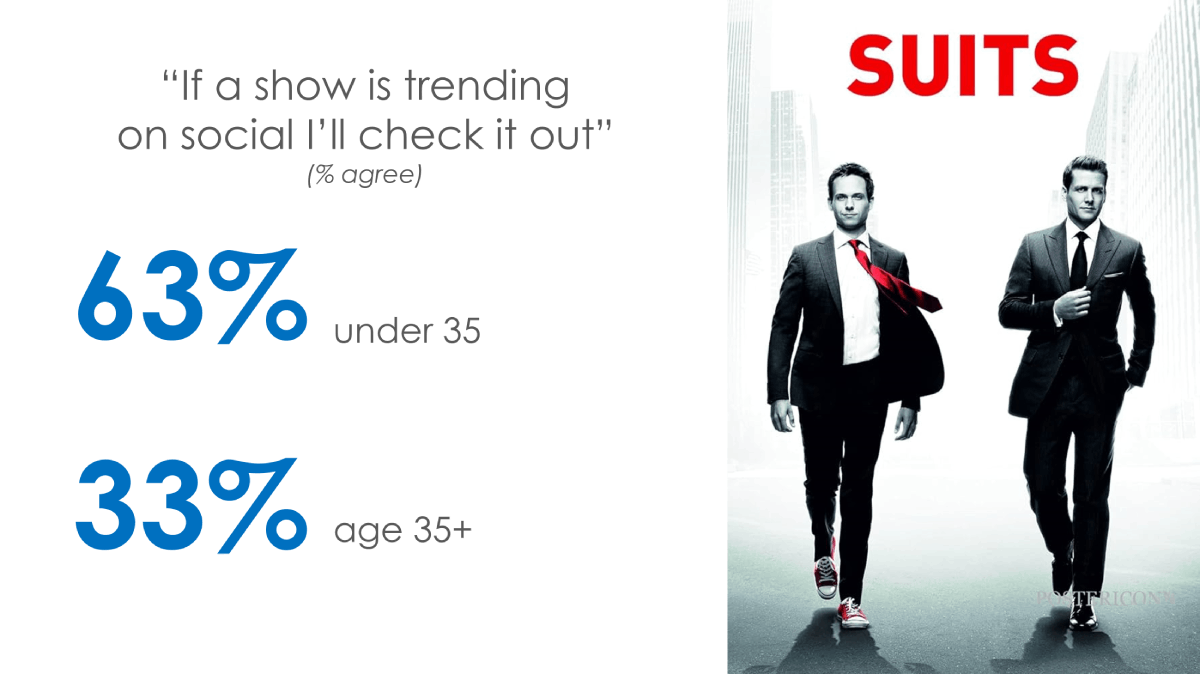
- “If a show is trending on social, I’ll check it out” – 63% of those under 35.
- Young people discover many of these shows via clips on social platforms – 63% among A13-24. (Hub Entertainment Research, 2025)
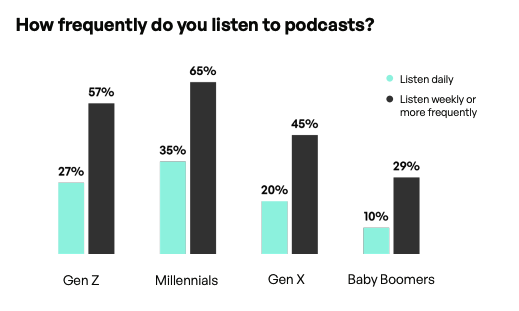
Podcasts
- Podcasts provide a daily dose of insights and entertainment for over 1 in 4 Gen Z and Millennials. (Podcast Frenzy: Riding the Wave of Ever-Increasing Popularity, KS&R Inc., 2025)
KS&R 2025
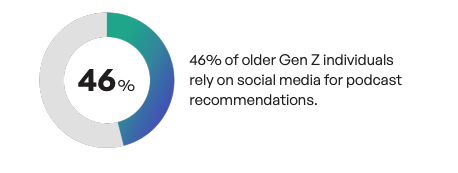
- How older and younger Gen Zs discover their podcasts (Podcast Frenzy: Riding the Wave of Ever-Increasing Popularity, KS&R Inc., 2025)

KS&R 2025
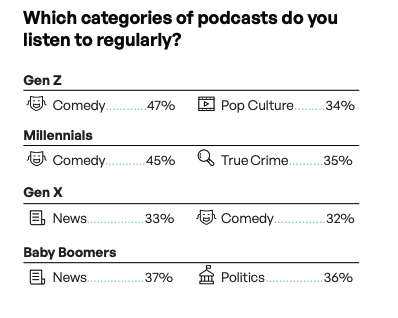
- Which Podcast Genres are Most Enticing? For Gen Z, it’s Comedy (Podcast Frenzy: Riding the Wave of Ever-Increasing Popularity, KS&R Inc., 2025)
KS&R 2025
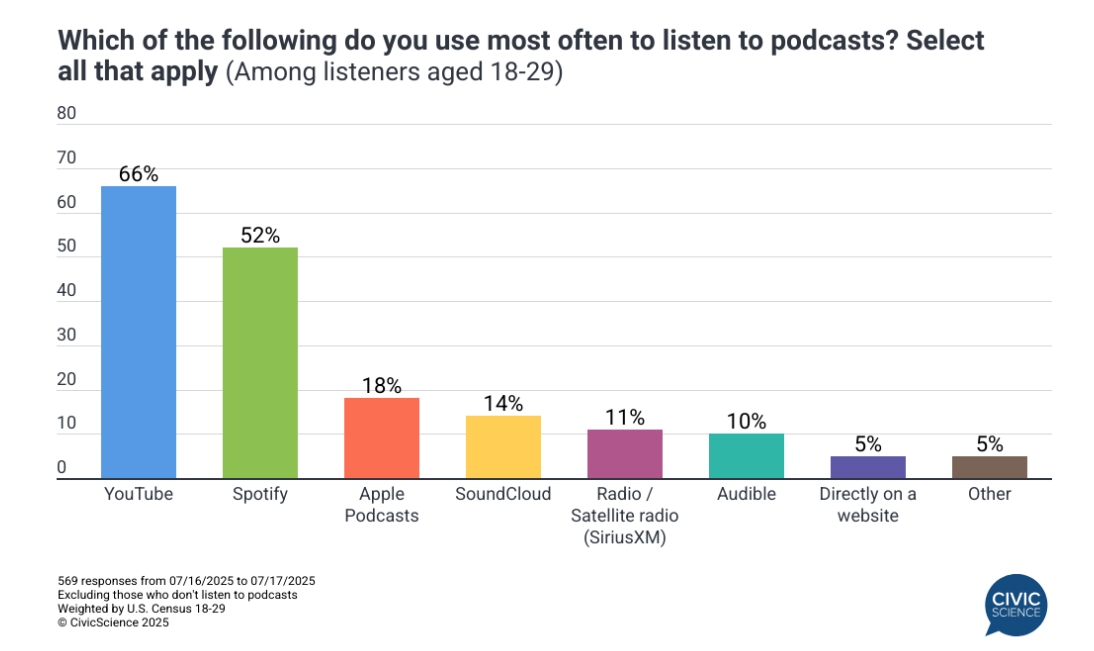
- YouTube and Spotify are the frontrunners when it comes to where Gen Z listens to their podcasts. (Civic Science, 2025)
Social Media Use
- 94% of Gen Z report using at least one social media platform per day in 2025. TikTok was the #1 platform, with over 83% of its users logging in at least once a day. (SQ Magazine, 2025)
- YouTube remains the second most-used platform, engaging 78% of Gen Z daily, especially for long-form content. (SQ Magazine, 2025)
- Instagram usage among Gen Z has slipped by 9% YoY, with a shift toward short-form video platforms, while Threads captured 27% of Gen Z users weekly in 2025.(SQ Magazine, 2025)
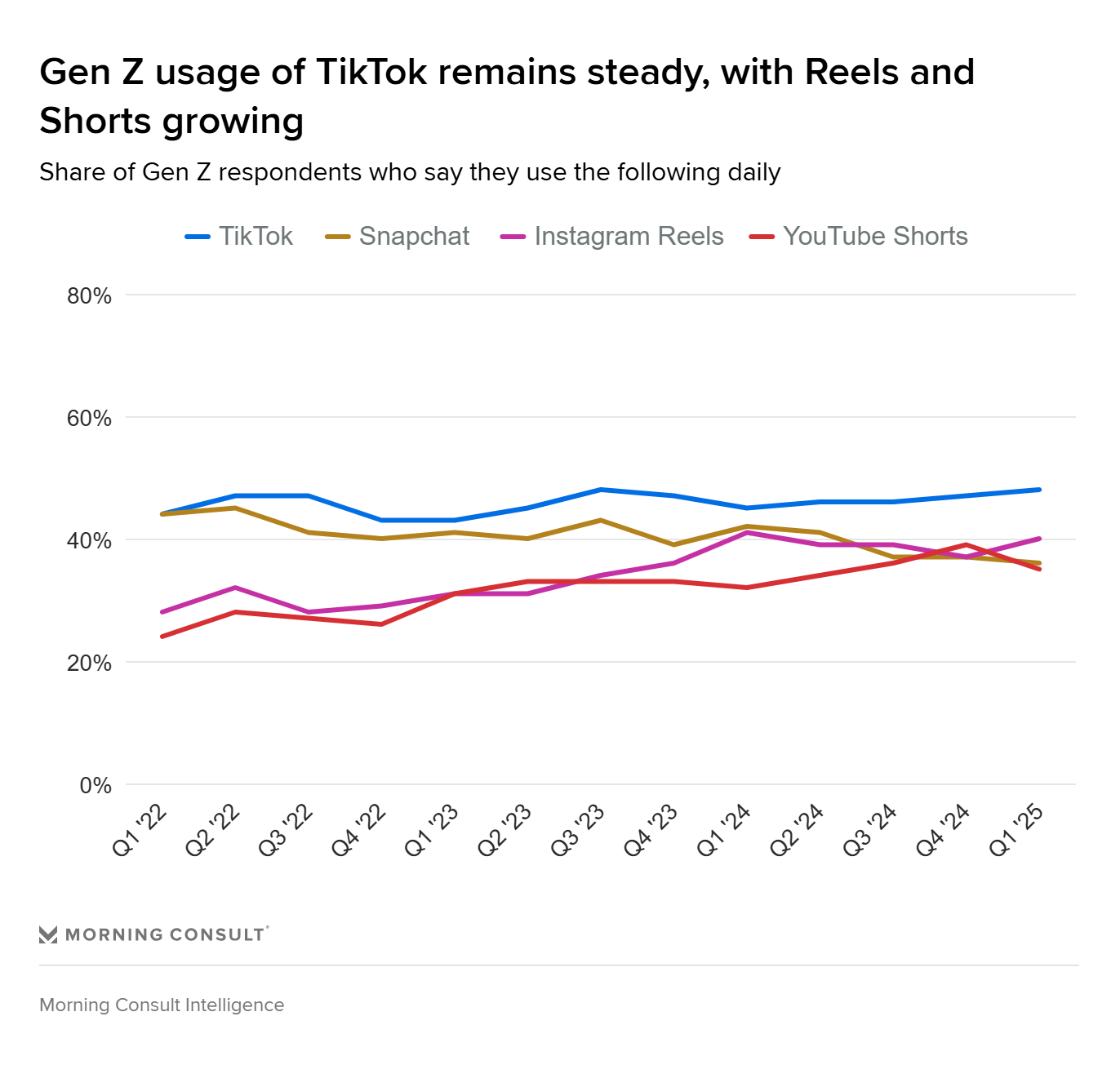
- With TikTok in the lead, the race for #2 remains tight as Reels and Shorts continue drawing users (Morning Consult, 2025)
- 85% of Gen Z prefer brands that use memes or cultural references appropriately in social media advertising. (SQ Magazine, 2025)
- Close to half of those under 35 feel they spend too much time on platforms like TikTok or Instagram and might better spend their time with TV and movies with 26% of viewers age 35+ feeling the same, despite spending less time with this content. (Hub Entertainment Research, Video Redefined, 2025)
- Younger viewers spend more time on social video and gaming (45%) than watching TV (16%). (Hub Entertainment Research, 2025)
Gaming
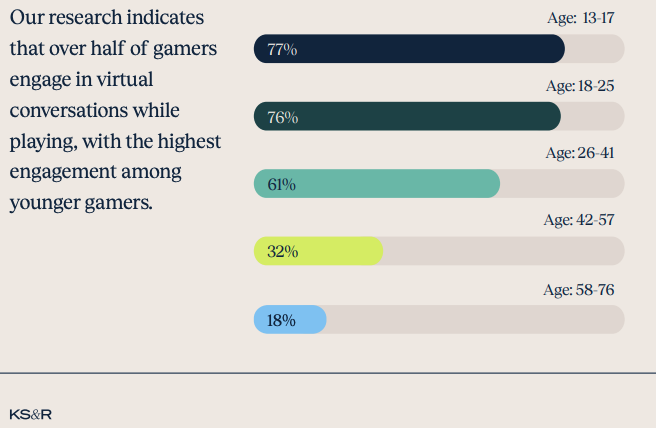
- Social Gaming: Where Connections are Made – 77% of gamers 13-17 engage in voice, text, or video chat while gaming Game On: Unleashing New Opportunities in the Gaming World, KS&R, Inc., 2025)
KS&R 2025
- Microtransactions in Gaming: 30% of gamers aged 18-41 have recently purchased in-game content for free-to-play games, allowing big profits from small spends (Game On: Unleashing New Opportunities in the Gaming World, KS&R, Inc., 2025)
Marketing to Gen Z
Inside Gen Z’s Streaming Choices
Tubi & The Harris Poll shared key insights in their report, “Tubi & The Harris Poll: The Stream 2025: Audience Insights Shaping Streaming” on the changing streaming behaviors of Gen Z consumers and how marketers can reach these audiences amid the shifting entertainment landscape:
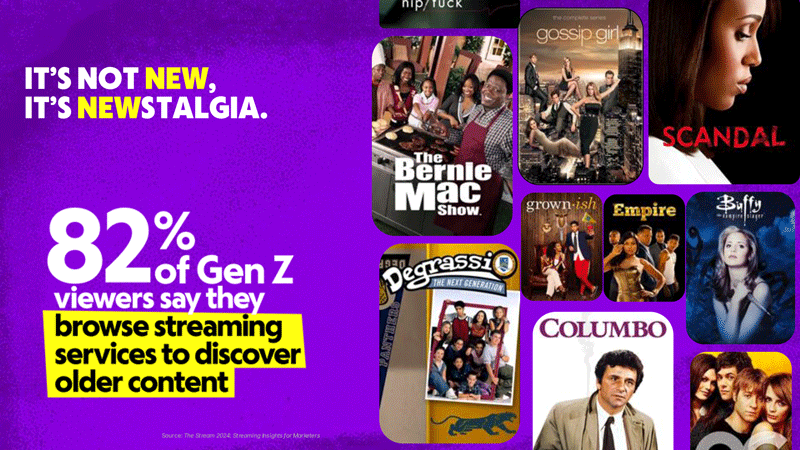
- 82% of Gen Z viewers say they browse streaming services to discover older content
- 73% of Gen Z say they’re tired of keeping up with what’s trendy
- 71% of Gen Z viewers say they’re exhausted from trying to choose what to watch
- 70% of Gen Z say they feel seen when a streaming service helps them find their newest fandom or niche
- 72% of Gen Z wish they had more of a say in the content that gets made for streaming services
CTAM members can read a recap of Tubi’s session from CTAM Think April 2025 which was based on this report.
*Exclusive to CTAM members. Are you a member but don’t have an account? Create a profile here to access this CTAM member information, as part of your company’s CTAM membership.
- Social media platforms and mobile apps influence the purchasing decisions of approximately 55% of Gen Z smartphone users. (market.us, 2025)
Gen Z Shopping Habits
Generation Z’s shopping habits are shaped by an evolving world of digital convenience and personal values. While they rely on their own online research, peer reviews, and social media influencers, they still prefer the in-store, hands-on experience. Gravitating toward brands that support social causes and those offering personalized options reflect a desire for both ease and authenticity in their shopping choices.
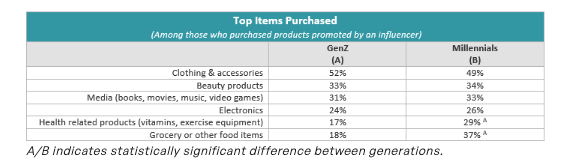
- 80% of Gen Z and Millennials report that an influencer’s endorsement has at least some influence on their purchase decisions. And what are their top purchases? (How Much Influence Do Influencers Really Have? KS&R, Inc., 2025)
KS&R 2025
81% conduct online research before making a purchase.
85% read reviews prior to making a purchase decision.
62% prefer to see reviews from people they know or trust.
70% use their smartphones for shopping.
62% are good with mobile-only checkouts.
51% have purchased directly through a social media platform.
72% prefer in-store
80% like to see, touch, and try before buying.
47% are more likely to buy a product if they can personalize it in-store.
66% have purchased a product based on a review from a social media influencer.
63% follow influencers on social media to discover new products.
59% say that they trust influencers more than traditional celebrities.
67% report that discounts and promotions influence purchasing decisions.
60% are more likely to purchase from brands that support causes they care about.
50% believe it is important for brands to take a stand on social issues.
(Source: IBM, Morning Consult, IBM, Forbes, 2025)
Social Issues
Having grown up in a constantly changing world, it’s only natural that this generation has strong feelings about the environment, politics, and social justice. Here’s how Gen Zs view some of today’s most pressing social issues:
- | Gen Z has the lowest trust of any generation (Deloitte)
As Gen Z matures, multiple landscape changes are occurring based on this generation’s expectations in the workplace, media, culture, and consumer experiences. - The cost of living is Gen Z’s greatest concern, while climate ranks high (Deloitte)
When asked about their concerns on a variety of social issues, 34% of Gen Zs said they were concerned about the cost of living — the highest percentage on any issue. 21% are concerned about unemployment, 20% about climate change, 19% about mental health, and 17% about crime and personal safety. - Searches for “climate risk” are up 200% over the past five years.
46% of Gen Zs have either already changed jobs/industries or plan to do so due to climate concerns (Deloitte)
Gen Zs are willing to take decisive action in the fight against climate change. Not only are almost half either changing industry or thinking about it, but 54% are putting pressure on their employers to take more environmental action. Almost two in three Gen Z consumers (64%) are willing to pay more to purchase sustainable products. 62% have felt worried or anxious about climate change within the last month. - Around 1 in 3 Gen Zs are regularly involved in some form of activism (United Way)
32% of Gen Zs partake in activism or social justice work, a figure rising to 40% among college students. Two-thirds say most of their activism takes place online.
Resources

The way brands engage with streaming audiences is shifting, and the old playbook won’t cut it. Tubi’s latest report, developed by The Harris Poll, unpacks the biggest trends shaping the future of streaming—especially when it comes to Gen Z—helping marketers break through the noise and connect with younger audiences in meaningful ways.

A presentation from CTAM Think, April 2025
Video Redefined identifies the most popular types of non-premium content across platforms, consumer reaction to advertising, and how consumption of this content may (or may not) affect other platforms.
This first-of-its-kind deep dive report taps into Gen Z spending potential today, tomorrow and in the future to help brands build, foster, and maintain loyalty from Gen Z.
(Nielsen IQ)